

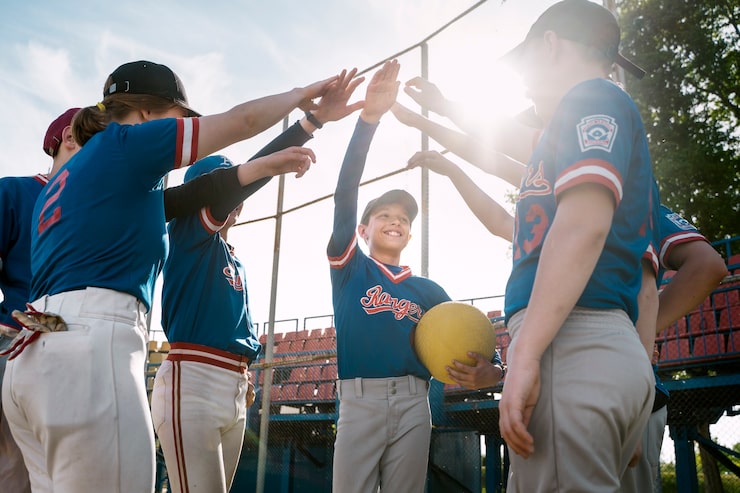
Sports Team Building Activities are essential for fostering collaboration, enhancing communication, and strengthening relationships among athletes, coaches, and staff. In the fast-paced world of competitive sports, raw talent alone is not enough. Teams that engage in purposeful team-building exercises often see improved coordination, resilience, and a sense of unity that translates directly onto the field.
Consider a local soccer team struggling with miscommunication during games. By introducing Sports Team Building Activities, the coach not only improved player synergy but also increased overall performance. Activities designed around trust, strategy, and shared problem-solving help athletes connect beyond their individual roles, creating a cohesive unit capable of executing complex plays efficiently.
Trust-Building Through Interactive Challenges
Trust is the cornerstone of any successful sports team. Activities such as blindfolded obstacle courses or paired problem-solving challenges encourage athletes to rely on each other’s judgment and skills.
For instance, a basketball team might engage in a “trust pass” drill, where teammates must coordinate blind passes while communicating non-verbally. This exercise reinforces confidence in one another’s abilities, reduces hesitation during real matches, and strengthens the interpersonal bonds that keep the team functioning under pressure.
Communication-Focused Activities
Effective communication can make or break a team’s performance. Sports Team Building Activities that emphasize clear, concise, and strategic communication help players understand both verbal and non-verbal cues.
A rugby squad might practice “silent strategy” drills where players execute plays without speaking, relying only on hand signals and gestures. Over time, athletes develop an intuitive understanding of each other’s movements, fostering faster, more precise responses during actual matches.
Problem-Solving and Strategy Exercises
Team sports often demand quick decision-making under pressure. Activities designed around problem-solving enhance collective strategic thinking.
For example, a volleyball team might engage in a “puzzle match,” where certain plays are constrained by specific rules, requiring the team to adapt quickly. Such challenges not only strengthen analytical thinking but also encourage creativity in approaching complex scenarios, ultimately improving in-game adaptability.
Real-Life Scenarios and Role Reversal
Role reversal exercises are an innovative way to build empathy and understanding within a team. By having players switch positions or responsibilities temporarily, athletes gain insight into their teammates’ perspectives.
A hockey team might have forwards practice defensive roles for a session, experiencing the challenges their teammates face daily. These exercises cultivate mutual respect and highlight the importance of each position, fostering a sense of shared responsibility that strengthens overall collaboration.
Outdoor and Adventure-Based Activities
Outdoor challenges such as ropes courses, hiking, or survival simulations are increasingly popular in Sports Team Building Activities. These experiences combine physical exertion with strategic teamwork, encouraging participants to navigate obstacles collectively.
A track and field squad undertaking a weekend obstacle course learns to strategize, support, and motivate each other, transferring these skills back to competitive events. The combination of physical challenge and teamwork builds resilience, accountability, and trust in ways traditional practice sessions often cannot.
Incorporating Technology and Analytics
Modern sports teams are leveraging technology to enhance team-building efforts. Video analysis, virtual simulations, and interactive apps allow athletes to visualize plays, track progress, and collaborate on strategy outside of practice.
For instance, a cricket team might use a simulation tool to plan batting or bowling sequences collaboratively. Engaging in these tech-driven activities fosters analytical thinking while providing a platform for players to communicate strategies in a low-pressure environment.
Mentorship and Peer Learning
Mentorship programs are another form of Sports Team Building Activities that boost collaboration. Experienced players guide newer teammates through training routines, sharing insights, tips, and personal experiences.
This approach not only strengthens relationships but also accelerates skill development. A seasoned volleyball player mentoring a rookie creates a culture of support and knowledge transfer, enhancing overall team cohesion and confidence.
Incorporating Fun and Creativity
Team-building activities do not have to be strictly performance-oriented. Creative and fun exercises, such as team art projects or sports trivia challenges, provide a relaxed environment for interaction.
A soccer team creating a mural representing their season fosters unity while allowing players to express themselves in non-athletic ways. Such activities contribute to positive morale, improve interpersonal relationships, and reduce stress—factors that directly affect collaboration on the field.
Measuring Impact and Continuous Improvement
Successful Sports Team Building Activities include evaluation and feedback mechanisms. Coaches can assess improvements in communication, trust, and coordination through observation and surveys.
A basketball coach, for example, might track completion times and error rates during team challenges over a season. Continuous assessment ensures that activities remain relevant, engaging, and effective in driving collaboration and performance growth.
The Competitive Advantage of Strong Team Bonds
Ultimately, investing in Sports Team Building Activities provides more than short-term benefits. Teams with strong internal bonds exhibit better performance under pressure, adapt more effectively to challenges, and maintain higher morale during difficult seasons.
Athletes who understand and trust each other can anticipate movements, communicate efficiently, and respond to unexpected scenarios seamlessly. The result is a team that not only plays together but also thrives together—demonstrating that collaboration cultivated off the field translates directly to success on it.
Read also:
bangladesh national cricket team vs sri lanka national cricket team match scorecard
sri lanka national cricket team vs bangladesh national cricket team match scorecard
sharjah warriors
bangladesh national cricket team vs sri lanka national cricket team match scorecard
sri lanka national cricket team vs bangladesh national cricket team match scorecard
bangladesh national cricket team vs sri lanka national cricket team
faheem ashraf stats